Warehouse & Industrial Pest Control Brisbane
Rodent bait station programs, bird netting and spike installation, loading dock treatments, stored product pest management, and perimeter spray programs for warehouses, factories, and industrial facilities across Brisbane and Southeast Queensland.
Common Warehouse and Industrial Pests
Large footprints, constant vehicle access, stored goods, and proximity to industrial land all create pest pressures that smaller premises do not face. Each pest requires a different management approach at warehouse scale.
Rodents (Rats and Mice)
The primary pest in most Brisbane warehouses. Rats access via loading dock gaps, roof vents, and floor drains. Mice travel through cable management and pallet racking voids. Both chew electrical cables, contaminate stock, and create fire risk in electrical switchboards and racking uprights. Tamper-resistant bait stations are the standard approach, not snap traps, in a working warehouse environment. See our rodent control page.
Loading dock, bin areas, roof voids, rackingBirds (Pigeons, Sparrows)
Pigeons roost on internal roof steelwork and beam flanges in warehouses with open loading dock doors or broken roof sheeting. Bird droppings contaminate stock, create slip hazards, and accelerate corrosion of roof steel. Sparrows nest in pallet racking and high-bay light fittings. See our bird control page.
Roof steelwork, beam flanges, ventilationCockroaches
American cockroaches enter warehouses through loading dock drains and floor drain systems. They harborage in bin areas, tea rooms, and behind switchboards. While less of a product contamination risk than rodents, a cockroach infestation in a warehouse storing food or pharmaceutical goods is a compliance issue. See our cockroach control page.
Drains, tea rooms, switchboardsStored Product Pests
Grain beetles, flour weevils, merchant grain beetles, and Indian meal moths infest stored dry goods including pet food, grain, seeds, flour, nuts, and spices. They enter on incoming pallets and spread rapidly through stored goods. Regular inspection and targeted treatment of affected lines prevents a single infested pallet from contaminating an entire storage bay.
Dry goods storage, pallets, packagingWarehouse Pest Control Services
Warehouse pest management requires different methods at different scales. A single spray is not a program. These are the specific services that form an effective industrial pest management plan.
Loading Dock Treatment
Loading dock roller door bases, dock levellers, drain pits, and bin areas treated every 6-8 weeks. The loading dock is the primary entry point for both rodents and cockroaches in any warehouse. Treating only the interior without addressing the dock is a reactive approach that never resolves the source.
Every 6-8 weeksExternal Perimeter Spray
Full external perimeter spray to all walls, roller door bases, personnel door thresholds, and garden bed edges every quarter. A perimeter barrier stops ants, cockroaches, and spiders from establishing entry routes before they reach the interior.
QuarterlyRodent Station Program
Tamper-resistant bait stations placed at all entry points, along external walls, in bin areas, and inside the facility at high-risk zones. Stations inspected and refilled monthly. Activity levels recorded and reported after every visit. See our rodent control page.
Monthly inspectionBird Netting
Industrial-grade netting installed across roof openings, high-bay areas, and structural voids where birds are roosting. Netting is matched to the target species and installed to prevent access without blocking ventilation or fire suppression systems.
Site-specificBird Spike Installation
Stainless steel spikes fitted to beam flanges, ledges, and parapet walls where birds land before accessing the roof interior. Spikes are the correct solution for smaller landing areas where netting is not practical or cost-effective.
Permanent solutionStored Product Treatment
Inspection of stored goods for beetle, weevil, and moth activity. Targeted treatment of affected stock and surrounding areas. Recommendations for incoming pallet inspection procedures to prevent re-introduction from supplier stock.
On detection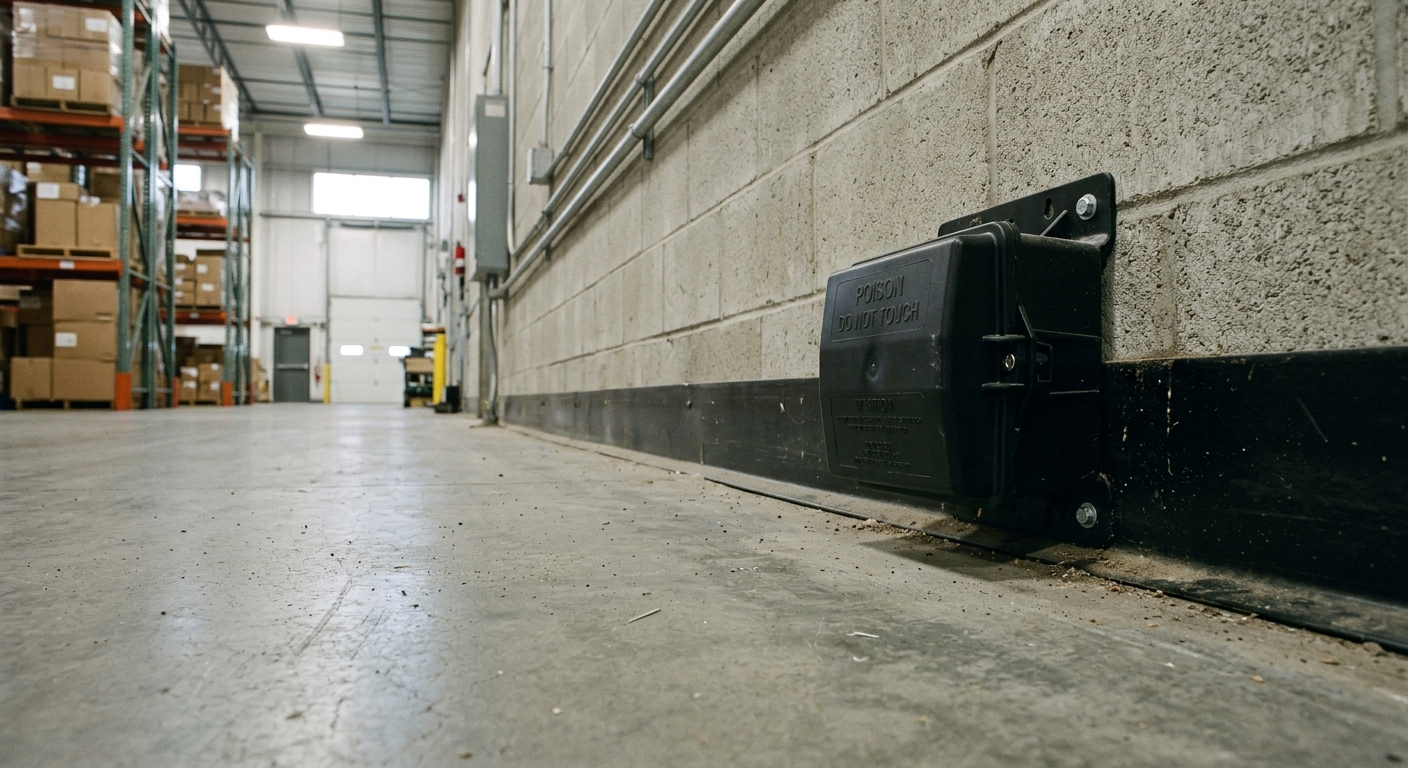
Bird Netting & Spike Installation
Pigeons in a warehouse roof space are not just a nuisance. Their droppings create slip hazards on walkways, contaminate pallets stored below, carry disease, and accelerate steel corrosion. Bird control in an industrial setting requires physical exclusion, not deterrents. See our bird control page.
Industrial bird netting
Heavy-duty netting installed across open roof sections, bay entrances, and internal beam structures to prevent access by pigeons and sparrows. Net gauge matched to the target species. Does not affect ventilation or fire suppression.
Spike installation to beam flanges
Stainless steel spikes fitted to structural steel beam flanges, purlins, and ledges where birds land before moving deeper into the roof space. Appropriate for smaller landing areas not suited to netting.
Entry point proofing
Loading dock roller door gaps, roof sheet penetrations, ventilation louvers, and high-bay windows proofed against bird entry using wire mesh and purpose-built exclusion products.
Post-installation report
Written report with photos documenting all installed bird control measures for facilities management records. Includes recommended inspection schedule for net integrity checks.
Monthly Rodent Station Monitoring
A rodent bait station program is not a one-off installation. Stations need monthly inspection to confirm bait take, replace consumed bait, identify new activity, and check for damaged or compromised stations. A station that has been hit hard and not refilled for three months is not protecting your facility.
What Monthly Monitoring Includes
Every visit covers the full station network across the facility.
Warehouse Pest Control Pricing
All prices include a written service report. Monthly programs include emergency callout for active rodent sightings between visits. Large facilities and multi-building industrial estates are quoted after a free site inspection.
| Service | Frequency | Starting Price | Includes |
|---|---|---|---|
| Rodent monitoring contract | Monthly | from $450/mo | Station inspection + refill + activity report |
| Perimeter spray | Quarterly | from $350/visit | Full external perimeter + loading dock |
| Loading dock treatment | Every 6-8 weeks | from $220/visit | Dock base, levellers, bin area, drain |
| Bird netting | One-off (permanent) | Call for quote | Installation + report + net specifications |
| Bird spike installation | One-off (permanent) | Call for quote | Installation + report |
| Stored product treatment | On detection | from $280 | Inspection + treatment + recommendations |
Prices are indicative and depend on facility size and program scope. Request a free site inspection and quote or call 0406 178 471.
Warehouse Pest Control FAQ
Get a Free Warehouse Site Inspection.
Rodents · Birds · Stored Product Pests · Loading Dock Treatment · Monthly Contracts