Restaurant, Cafe & Hospitality Pest Control Brisbane
HACCP-compatible pest management for Brisbane restaurants, cafes, hotels, and food businesses. After-hours service, kitchen-safe products, audit-ready documentation, and monthly contracts. Same-day response for urgent pest situations.
Why Restaurants & Cafes Are High-Risk for Pests
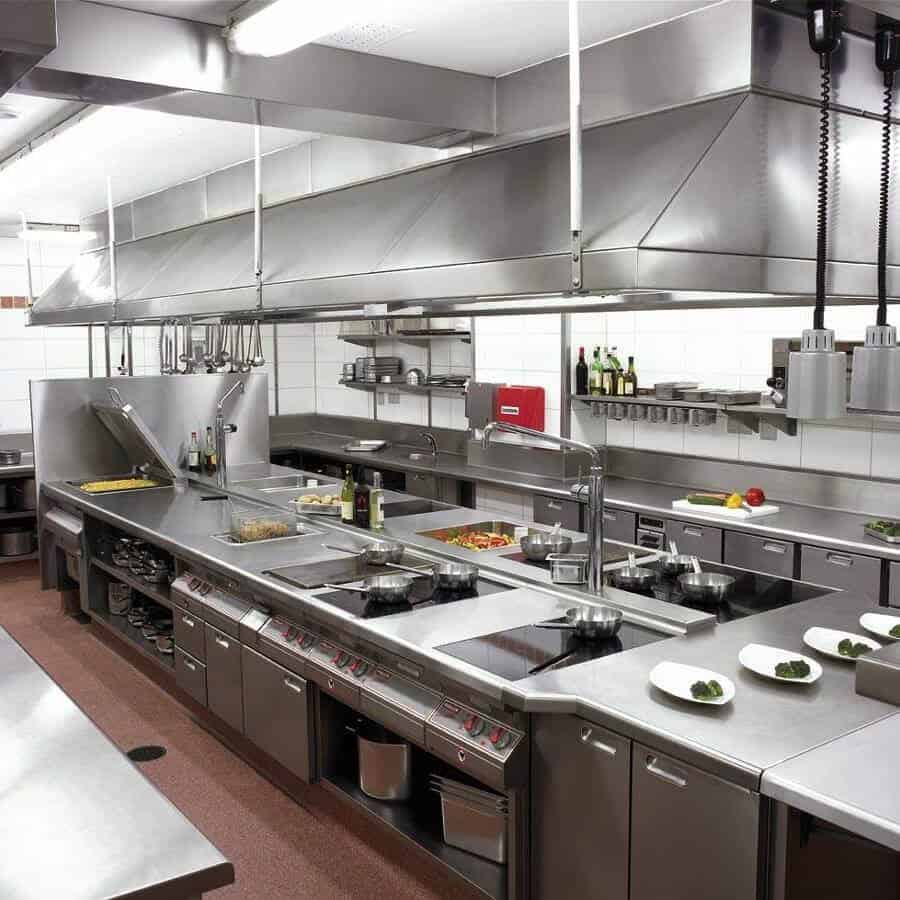
Commercial kitchens provide everything a pest needs: constant food supply, warmth from cooking equipment, moisture from dishwashing, and hiding spots in service voids, grease traps, and bin areas. A single German cockroach sighting during a health inspection can result in an immediate compliance notice.
Grease and food residue
Fryers, grills, and food preparation surfaces produce residue that builds up in voids and drains, feeding cockroach and fly populations year-round.
Warm equipment voids
Beneath fridges, inside motor housings, and behind cooking equipment provide warm, dark, undisturbed harborage for German cockroaches that spray cannot reach.
Delivery and bin areas
Loading docks, bin stores, and cardboard storage attract rodents and cockroaches from surrounding areas. These are entry points, not just harborage zones.
Health department exposure
Brisbane City Council and Queensland Health conduct unannounced inspections. Evidence of pests or poor pest management can result in compliance notices, fines, or closure orders.
Common Restaurant and Cafe Pests
Four pest types account for the vast majority of hospitality compliance issues in Brisbane. Each requires a different treatment approach in a food service environment.
German Cockroaches
The primary pest problem in Brisbane commercial kitchens. They live inside equipment voids, behind splash backs, and in cable management trays. Surface spray is largely ineffective in kitchen environments because cockroaches harborage in areas spray cannot penetrate. Gel bait applied directly to harborage sites is the correct treatment method in food service areas.
Rodents (Rats and Mice)
Rats enter via grease traps, floor drains, and gaps around services. Mice are common in dry storage and behind servery counters. Both contaminate food through droppings, urine, and fur. Tamper-resistant bait stations in service voids and bin areas are standard. Entry point identification and exclusion recommendations are included in every rodent program.
Flies (Drain Flies, House Flies, Blowflies)
Drain flies breed in build-up inside floor drains and grease traps. House flies and blowflies are drawn to bin areas and exposed food. Fly management in hospitality requires both source elimination and barrier treatment. UV light traps are used in food preparation and storage areas where spray cannot be applied.
Ants
Ants in hospitality venues are drawn to sugary beverages, cooking oils, and food waste. They enter from outdoor areas through gaps around plumbing and door thresholds. Colony-targeting bait is used instead of spray to eliminate the colony rather than scatter it further through the venue.
HACCP & Food Safety Pest Control
Hazard Analysis Critical Control Points (HACCP) requires that pest control be part of your food safety program. This means documented, scheduled treatment by a licensed operator, not just reactive spraying when something is sighted. See our commercial pest control page for full program details.
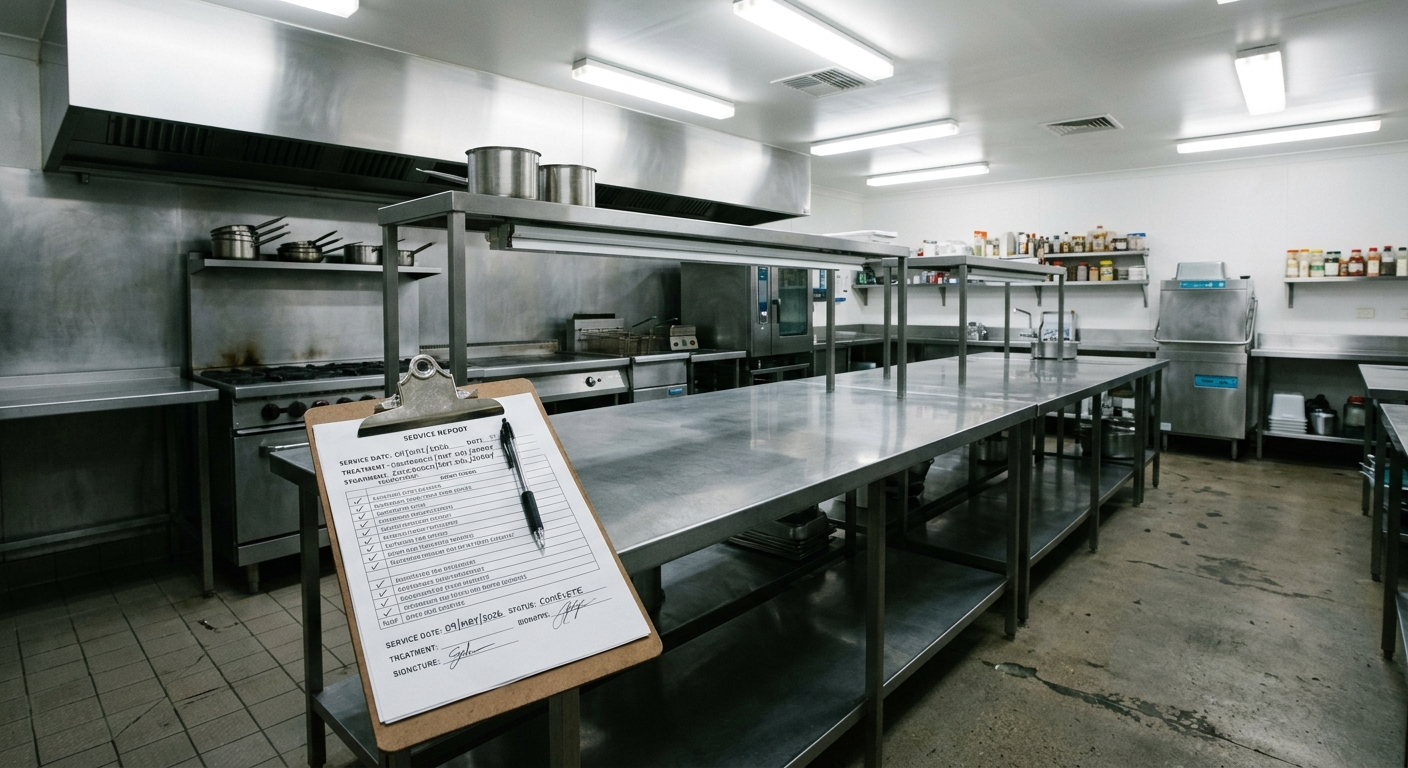
Written service reports after every visit
Signed by the licensed technician with products, application areas, and findings. Formatted for Queensland Health auditors.
APVMA-registered products only
All products are legally registered for food premises use. SDS sheets available for every product used. No unlicensed or unapproved products.
Pest sighting logs for staff
A standard pest sighting log is provided for your staff to record observations between scheduled visits. This is reviewed on each treatment and forms part of your HACCP file.
Targeted application away from food
Gel bait and tamper-resistant stations used in food areas. No spray applied to food contact surfaces, open food storage, or preparation surfaces.
Kitchen, Dining & Storage Area Treatment
Different areas of a hospitality venue require different treatment methods. Applying residual spray near food preparation areas is not acceptable. Here is how we treat each zone.
| Area | Pests Targeted | Treatment Method | Spray Near Food? |
|---|---|---|---|
| Behind cooking equipment | German cockroaches | Gel bait to harborage sites | No — gel only |
| Dishwash area and drains | Cockroaches, drain flies | Gel bait + drain enzyme treatment | No |
| Dry store and cool room | Rodents, cockroaches, ants | Tamper-resistant bait stations + gel | No |
| Bin room and loading dock | Rodents, flies, cockroaches | Bait stations + perimeter spray | No food present |
| Floor drains and grease traps | Drain flies, cockroaches | Enzyme drain treatment + gel | No |
| Dining room and bar | Ants, cockroaches, flies | Gel bait + residual spray (non-food areas) | Skirting areas only |
| External perimeter | Rodents, ants, cockroaches | Perimeter spray + bait stations | No food present |
After-Hours Service to Avoid Disruption
A restaurant cannot have a technician treating the kitchen during service. We schedule all treatments for outside your trading hours. Tell us your operating times when you request a quote and we will schedule around them.
Scheduled Around Your Trading Hours
Treatment after the last service, before morning prep, or during a closed day. We confirm the treatment window with you and the technician is finished before your staff arrive.
Audit-Ready Documentation
A Queensland Health or food safety audit can happen any time. Your pest control file needs to be ready. We provide and maintain all the documentation you need without having to ask for it.
After Every Treatment
Ongoing Compliance File
Restaurant Pest Control Pricing
All prices include HACCP documentation and a written service report. Ongoing monthly contracts cost less per visit and include emergency callout between scheduled treatments.
Prices vary by venue size and number of treatment areas. Request a free site assessment and quote or call 0406 178 471.
Restaurant Pest Control FAQ
Protect Your Restaurant Before the Next Inspection.
HACCP Compliant · After-Hours Available · Monthly Contracts · from $180/month